

Why Does Grout Keep Cracking at the Tub, and What Does Tile Repair in Albany, NY Do Differently?
The situations described here are composites drawn from the types of jobs and decisions we encounter regularly. Names and specific figures are illustrative.
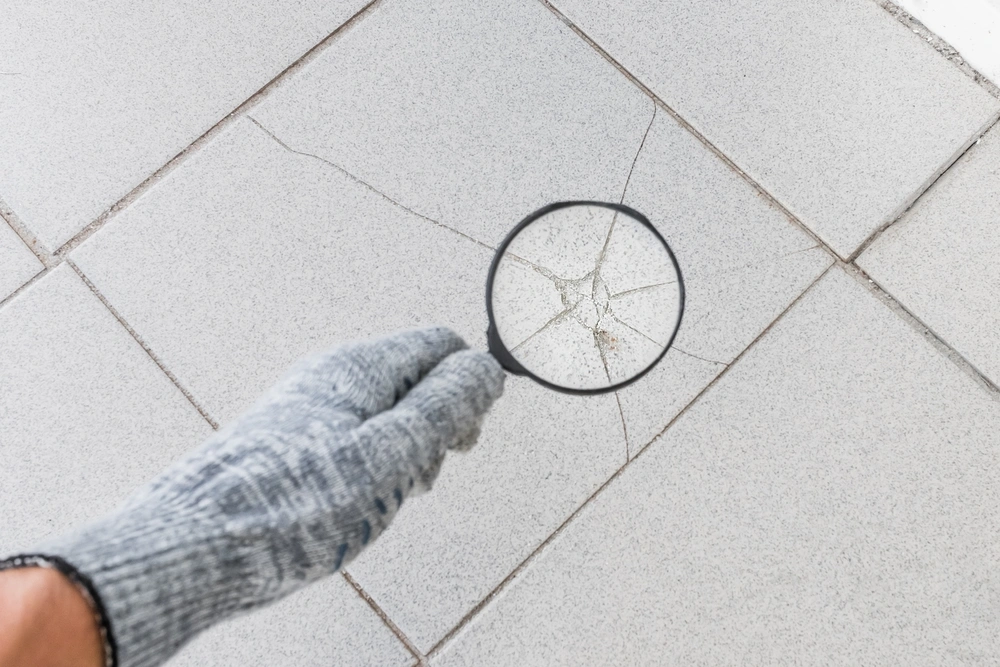
The first regrout was in October, right after the furnace came on for the season. The homeowner, who lived in a 1960s split-level in Delmar, had noticed a hairline crack in the corner where the tub met the tile wall. He bought a bag of grout, mixed it in a cup and pressed it in with a gloved finger. It looked perfect. By February the crack was back, thinner, but in the same place. It was the kind of repeat problem that sends many people looking for tile repair in Albany, NY and wondering if they are doing something wrong.
Grout is hard, and houses move
He was not doing anything wrong. He was using the wrong material in the wrong place. Grout is a rigid, cement-based filler that works well between tiles that sit flat on the same surface. At a corner, where a wall meets a tub or two walls meet each other, the surfaces behind the tile move independently as the house expands, contracts and settles. A rigid joint has nowhere to give. It cracks.
The Tile Council of North America’s installation handbook addresses this with a standard detail for movement joints, labeled EJ171. It calls for a flexible sealant, not grout, wherever tile changes plane, including wall-to-wall corners, wall-to-floor transitions and the joint between a tub and a tiled wall. Interior joints at the perimeter are typically about a quarter of an inch wide, and never less than an eighth. The sealant is usually a 100 percent silicone or a polyurethane that meets ASTM C920. Grout in those places is not a repair. It is a delay.
Why October is when it shows
Albany’s heating season is the reason the crack came back in the cold months. When the furnace runs, indoor air dries out and wood framing gives up moisture and shrinks slightly. Tubs, which are heavy and filled with water, hold their ground while the wall framing around them shifts. The gap that opens is small, often less than a millimeter, but it is enough to split a rigid joint. A homeowner can see the pattern in his own house: cracks that appear in the fall and widen in the dead of winter are usually movement, not poor workmanship.
That makes fall a good time for the kind of small sealing jobs that often get ignored, such as recaulking tubs, showers and backsplashes. It is also the time to look at the other places where a rigid joint is doing a flexible joint’s work. Our tile installation page covers how those joints are laid out in a new job, which is the best way to understand where they belong in an old one.
The part he could not see
When the handyman came out, he did not start with grout. He pressed on the tile along the cracked corner and listened for a hollow sound, then slid a thin blade into the gap. It went in deeper than it should have. Behind that corner the backer board was damp to the touch, and a pin-style moisture meter read well above the dry reading from the middle of the wall.
This is the real danger of a repeating crack. Water from every shower was getting through the open joint and into the wall, and it had been for two winters. The EPA’s guidance on moisture and mold is clear on the principle: mold needs moisture, and controlling moisture is how you control mold. A cracked corner that stays wet is the kind of place where mold starts out of sight. A similar pattern showed up in our account of a Pine Hills basement where hidden moisture turned into mold.
What the repair involved
The work was smaller than he feared but more careful than the three regrouts. The old grout and caulk came out of the corner completely. Because the board was damp and soft near the tub, a small section of tile came off, the damaged backer board was cut back to sound material and replaced, and the area was allowed to dry until the meter read normal. A waterproofing membrane went over the repaired section, new thinset set the tile back in place and the field joints were grouted. The corner and the tub joint were left ungrouted and sealed with a flexible silicone caulk color-matched to the grout.
In this illustration the repair took most of a day and ran to a few hundred dollars, a figure that depends on how much board has to be replaced and whether the tile can be saved. If tiles are cracked and cannot be reused, an exact match can be difficult in an older bathroom. Substituting a similar tile on one wall or using a decorative border to blend the repair can be a better choice than hunting for a discontinued product. The options for that kind of update are laid out on our bathroom renovation page.
How to tell cosmetic from serious
He asked the question homeowners always ask at this point: how do you know when a crack is only cosmetic? The handyman gave him a short list he could use himself. A crack that is hairline, dry and only at a corner is usually movement. Grout that crumbles or comes out in chunks suggests water. Tile that sounds hollow or moves under pressure has lost its bond. Soft drywall or stained paint outside the shower on the other side of the wall means water is traveling. A musty smell in the bathroom that does not go away with ventilation is worth a closer look.
When any of those signs are present, patching the surface is the wrong first step. Check the wall first. That is also why a small bathroom problem can sit under the same umbrella as larger home repair services, where the visible symptom is only a clue to something behind it.
What the story leaves behind
He did not regrout the corner a fourth time. He learned the difference between a joint that fills a gap and a joint that allows movement, and he went through the rest of the house looking at every spot where tile meets something else. The kitchen backsplash had one too. For anyone looking at tile repair in Albany, NY, the order is the same: find out why the crack opened, check the wall behind it, and use flexible sealant where the surfaces move.
If you’re looking for bathroom repair in the Albany area, you can reach out here.
Sources
- Tile Council of North America (TCNA): Handbook for Ceramic, Glass, and Stone Tile Installation, Movement Joints (EJ171)
- Ceramic Tile and Stone Consultants: How Do I Repair the Horizontal Grout Joint Between the Bathtub and the Tile Wall?
- U.S. EPA: A Brief Guide to Mold, Moisture, and Your Home
- U.S. EPA: Mold Cleanup in Your Home