

Is Your Outside Spigot Ready for Winter, or Does It Need Outdoor Faucet Repair in Albany, NY?
The situations described here are composites drawn from the types of jobs and decisions we encounter regularly. Names and specific figures are illustrative.
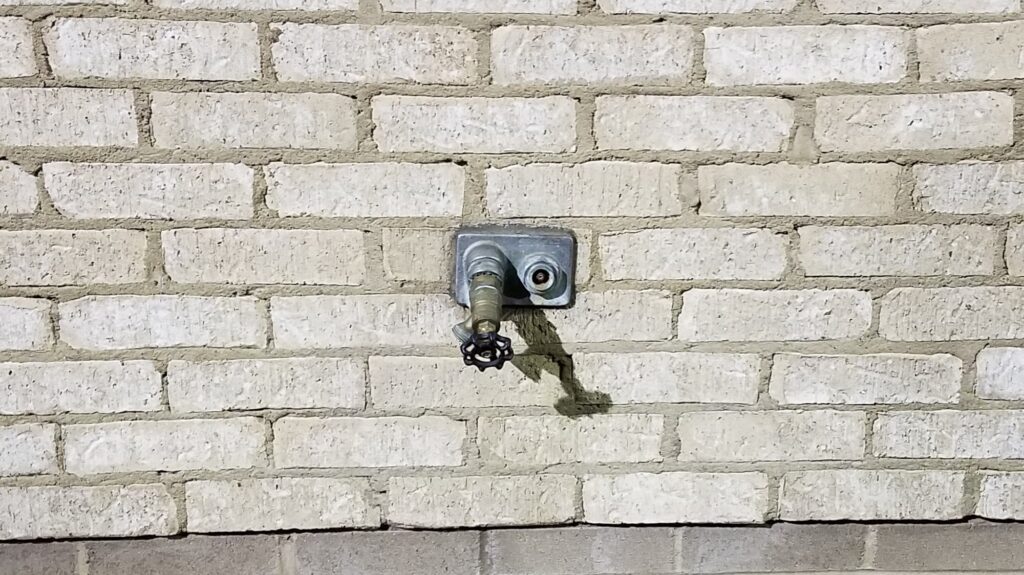
A homeowner with a 1970s raised ranch in Colonie asked us to winterize two outside faucets before the first hard freeze: one on the brick front by the garage and one on the back wall by the patio. Neither faucet could be winterized the way it was. The front one would not shut off from inside, and the back one had split inside the wall last winter without anyone knowing. What looked like a twenty-minute visit became a half-day of outdoor faucet repair in Albany, NY, and the homeowner had to decide how to fix each one.
Most winterizing instructions assume the indoor shutoff and the faucet still work. This post covers what to check when they do not.
Why the request always comes in late October
October is the month when the garden hose gets used for the last time, usually to rinse out gutters or wash down the patio furniture before it goes in the shed. After that, most people do not touch the outside faucet again until April. The National Weather Service office in Albany runs its frost and freeze alert program only during the growing season, and for the Hudson Valley that program wraps up in the second half of the fall. After that point, below-freezing nights are treated as normal and the alerts stop, so there is no alert on the night a faucet is at risk.
The American Red Cross lists outdoor hose bibs first among the pipes that freeze most often, ahead of pipes in crawl spaces and attics. That matches what we see. Damage to a frozen outside faucet is rarely noticed in January. It usually shows up in spring, when the hose goes back on and water leaks somewhere other than the spout.
The front faucet that would not shut off
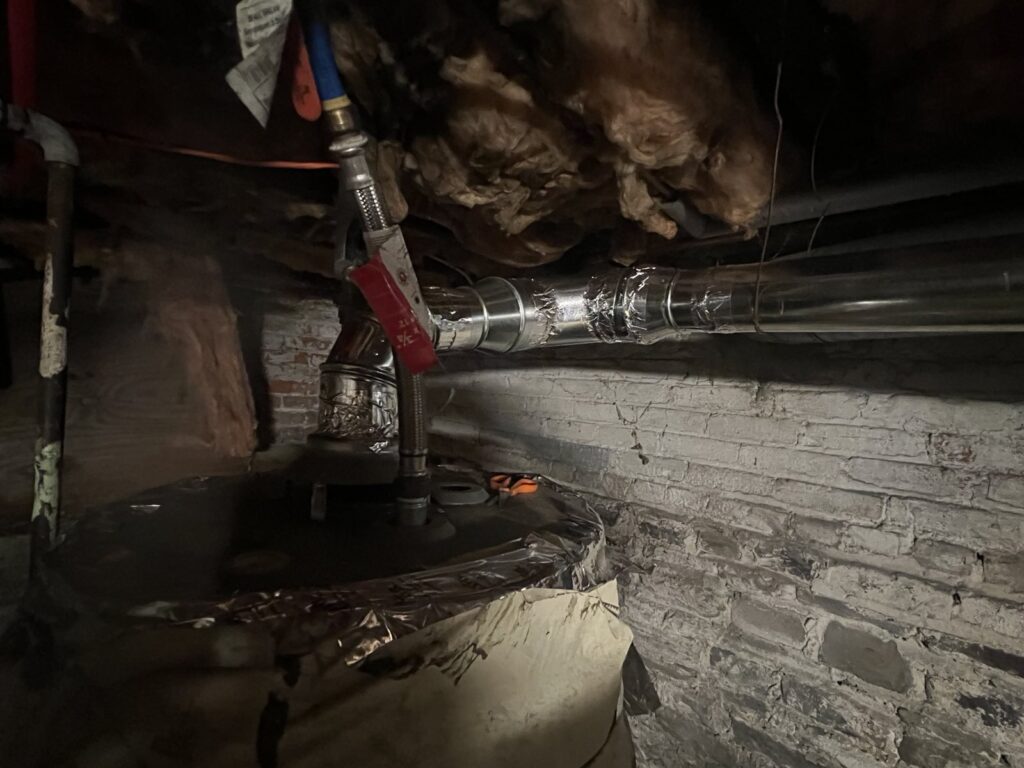
We started inside. The front faucet was an old-style compression hose bib, the kind with a short body that sits right on the outside of the wall. A faucet like that holds water all the way to the brick, so it depends on an indoor shutoff valve to drain it for winter. On this house, that valve was a gate valve tucked between ceiling joists in the lower-level laundry room, probably original to the house.
The homeowner had been closing it every fall. The handle turned, it stopped, and that felt like off. When we closed it and opened the outside faucet, water kept coming. It was not a full stream, but a steady small trickle that did not stop. Gate valves that sit open for decades build up mineral scale on the gate and the seat, and eventually the gate stops sealing even though the handle goes all the way down. That meant the front faucet had likely held water every winter for years, because the valve was not fully closing.
What was wrong with the back faucet
The back faucet looked like the better of the two. It was a frost-free sillcock, the long-bodied type where the actual valve sits a foot or so inside the house, in heated space, so the part outside the wall drains every time it is shut off. A previous owner had installed it. The homeowner assumed it needed nothing, and that is the most common thing we hear about frost-free faucets.
The sign was a brown stain on a drop-ceiling tile in the lower-level family room, almost directly under the back faucet. It had appeared in late summer, and the homeowner had blamed condensation from the air conditioning line. When we lifted the tile, the fiberglass batt above it was stained in a line that ran toward the rim joist. We had the homeowner turn the back faucet on from outside while we watched with a flashlight. Within a few seconds water was dripping off the body of the frost-free valve, from a split about two inches behind the seat.
Two things had gone wrong. A hose had been left connected for part of last winter, and the faucet had been installed with a slight backward pitch, toward the house instead of toward the spout. Either one can keep the tube from draining. Together, they held water right at the coldest point inside the wall. It froze, the tube split, and because the shutoff in a frost-free faucet is at the inside end, the split only leaked when the faucet was turned on. So all summer, each time the sprinkler ran, some of the water leaked into the ceiling.
This is the misconception worth correcting. A split frost-free faucet does not drip all the time. It can be dry for weeks and leak only during use, which is why it often goes unnoticed until someone notices a ceiling stain or a damp sill plate.
Going over the options with the homeowner
The back faucet was a straightforward decision. It had to be replaced, and the only question was with what. The front faucet had real options, so we sat down and went through them.
“I give you a written estimate before any work starts. That way you can see each option side by side and pick the one that fits how you actually use the faucet.”
Alex Sandul, Owner, A&S Home Services
| Front faucet option | What fall looks like after | Weak point |
|---|---|---|
| Leave the old gate valve and bib | Close a valve that does not seal and hope | Water stays in the faucet all winter |
| New quarter-turn ball valve with drain cap, new standard bib | Close valve inside, open faucet outside, open drain cap, done | Still depends on someone doing it each October |
| Convert to a frost-free sillcock through the brick | Pull the hose and leave it | Coring brick and rerouting pipe for a faucet used a few times a year |
The homeowner’s first instinct was to make both faucets frost-free so there would be nothing to remember. On the front, that stopped making sense once we looked at what it involved. The existing pipe came through the brick veneer in line with a joist, so a frost-free body would need a new hole cored through the brick, new supply piping, and a patch over the old opening. That is a lot of labor for a faucet used to fill a watering can a few times a year.
The ball valve option gave the homeowner something the old setup never had: a shutoff that actually closes, plus a small drain cap on the house side so the short pipe between the valve and the wall could empty completely. The fall routine is the same as before, but now the valve actually stops the water.
What the half-day actually involved
On the front, we shut off the main, cut out the old gate valve, and installed a quarter-turn ball valve with a drain cap. Outside, the old compression bib came off and a new one went on with a vacuum breaker on the hose thread. The New York State Residential Code requires hose connections like sillcocks and hose bibbs to be protected by a vacuum breaker, so a garden hose sitting in a bucket of fertilizer or a kiddie pool cannot siphon back into the house water. Many older faucets around Albany were installed before anyone checked for that.
On the back, the split frost-free came out and an anti-burst frost-free went in, the same length so it reached the same heated joist bay, and this time set with a definite downward pitch toward the spout. Anti-burst models add a pressure-relief valve, so if someone forgets the hose on a January night, the trapped water has somewhere to go instead of splitting the tube. A few dollars more than a standard frost-free faucet is easy to justify on a back wall where the hose tends to stay connected.
We cut out the stained batt, let the joist bay dry with a fan while we worked, replaced the insulation, and swapped the ceiling tile. Then we ran both faucets, shut them both down for winter the way the homeowner would do it from now on, and walked through it together. Labor came to a little over half a day at our standard hourly rate, plus parts for one valve, one standard bib, and one anti-burst sillcock.
Here is the fall routine we left on a sticky note by the laundry room valve, which works for most houses with one of each type:
| Faucet type | Before the first hard freeze | First use in spring |
|---|---|---|
| Standard bib with indoor shutoff | Remove hose, close indoor valve, open outside faucet, open drain cap, leave outside faucet open | Close drain cap and outside faucet, open indoor valve slowly, look for drips inside |
| Frost-free sillcock | Remove hose, let it drain, close indoor valve if there is one | Turn on with someone watching the ceiling or basement wall below it |
| Either type | Foam cover is optional extra, not a substitute for the steps above | A drip that keeps going after shutoff is worth a call before summer |
The Red Cross guidance lines up with the first row: close the inside valve, open the outside faucet, and leave it open so any water left in the pipe has room to expand. The step most people skip is checking that the inside valve actually stopped the water.
The questions that came up before we packed up
Most homeowners ask the same handful of things at this point, and this one was no different.
The first was whether a foam faucet cover would have saved the back faucet. Probably not. A cover keeps wind off the part outside the wall, but the split happened inside the wall, where water was trapped by the hose and the backward pitch. Covers help a little. They do not replace taking the hose off.
The second was how to tell if a faucet is frost-free without opening anything up. From inside, follow the pipe to where it meets the wall. If the faucet body extends into the house several inches or more before connecting to the supply pipe, it is likely frost-free. If the pipe runs straight to the wall and there is a separate shutoff valve somewhere on that line, it is likely a standard bib that needs to be drained every fall.
The third was whether last winter could have damaged a faucet that seems fine right now. It can, and the easiest test is the one we did: turn it on with the hose off and have someone watch the inside wall, ceiling, or basement below it for a minute or two. The EPA estimates that a faucet dripping once per second wastes more than 3,000 gallons a year, and a split inside a wall usually runs faster than that whenever the faucet is open.
The last question was whether this is plumber work. Replacing an outside faucet or a shutoff valve on a single line is contained repair work that we handle regularly as part of our handyman and home repair services. If the main shutoff for the house will not close, or the problem turns out to be a supply line failure that is flooding a basement, that is a licensed plumber’s job first, and the triage notes on our emergency services page lay out how we sort those calls. For a slow kitchen drip rather than an outdoor one, our post on when a dripping kitchen faucet stops being a DIY job covers the inside version of this decision.
What the Colonie job changed about how we read these calls
A “winterize my outside faucets” request now gets two questions from us before anything else. Does the inside valve actually stop the water? And has anyone run the frost-free faucet this year while watching the wall behind it? Those two checks take about ten minutes, and on this house they turned up both problems.
If your outside faucets shut off cleanly and the frost-free one drains when the hose comes off, winterizing really is a short job you can do yourself. If either check fails, it is better to find out in October than in April with a stained ceiling. For a broader look at fall and winter upkeep for pipes, drains, and fixtures, our homeowner plumbing maintenance guide covers the rest of the house. Questions about outdoor faucet repair in Albany, NY usually come down to those same two checks.
If you are looking for help with an outside faucet that will not shut off or drain, you can reach out to us here.
Sources
- Frozen Pipes: Preventing and Thawing Frozen Pipes, American Red Cross
- National Weather Service Albany’s Frost/Freeze Program, NWS Albany
- Chapter 29 Water Supply and Distribution (Section P2902.4.3 Hose Connection), New York State Residential Code 2020, via UpCodes
- Fix a Leak Week, U.S. EPA WaterSense
- Woodford Freezeless Anti-Burst Faucet, Plumbing & Mechanical