

Is Christmas Light Installation in Albany, NY Worth Paying For, or Should You Keep Climbing the Ladder?
The situations described here are composites drawn from the types of jobs and decisions we encounter regularly. Names and specific figures are illustrative.
A two-story colonial in Niskayuna had about 140 feet of roofline the owner wanted lit: the front eave, both front gables, and the porch roof. He had done it himself for years with a 24-foot aluminum extension ladder. Last November the base of that ladder slid a few inches on wet leaves while he was at the top of the gable. He was not hurt, but this year he called to ask whether Christmas light installation in Albany, NY was worth paying for, or whether he should just be more careful.
The number that framed the conversation came from the federal government, not from us. In one holiday season the U.S. Consumer Product Safety Commission estimated 14,700 emergency-room visits tied to holiday decorating, and 41 percent of those incidents were falls[1]. The same count included three deaths involving ladder falls[1]. That is the part of this job that carries the risk. The lights themselves are cheap and simple.
What the ladder in his garage told us
The first thing we looked at was not the lights. It was the ladder. It was aluminum, and the front gable has the service drop coming in on that side of the house. The Electrical Safety Foundation International recommends wooden or fiberglass ladders for outdoor decorating because metal ladders conduct electricity, and it says to keep yourself and your equipment at least 10 feet from power lines[2]. He had never thought about the ladder material. He had thought about the height.
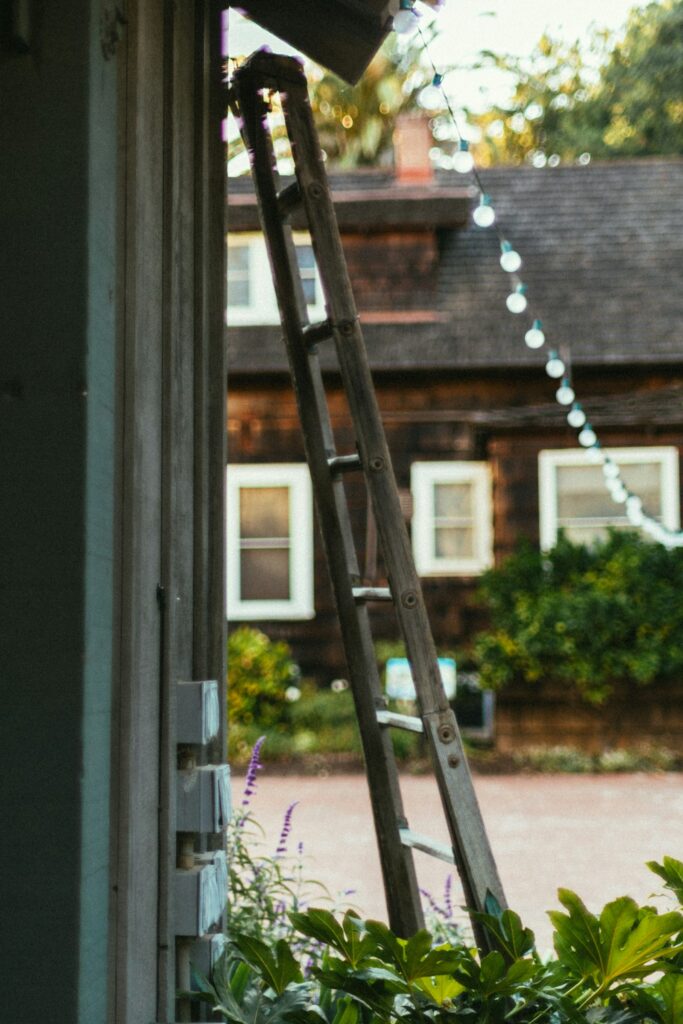
The height was the second problem. To reach the gable peak he had been extending the ladder almost to its last section and leaning it against the gutter. ESFI says a ladder should extend at least three feet past the edge of the roof[2], and OSHA’s portable ladder guidance says the same thing for any extension ladder used to reach an elevated surface[3]. OSHA also says not to stand on the top three rungs, and to set the base out from the wall a quarter of the ladder’s working length[3]. On a 24-foot ladder reaching a second-story gable, there was not much margin left on either rule.
The slip last year happened on leaves, which is the other local detail. Around Niskayuna the last leaves are often still coming down when people want the lights up, so the ground under the ladder tends to be wet and soft. OSHA’s guidance is to use a ladder only on a stable, level surface unless it is secured[3]. A leaf-covered lawn after rain is neither.
Three ways to get the lights up
He had three options on the table, and he wanted them side by side before he decided. A seasonal lighting company had quoted a package that included their own lights, installation, and takedown. He could also hang his own strings again with a better ladder setup. Or he could pay for a handyman by the hour to hang the lights he already owned. National averages are a rough guide only, but Thumbtack puts the typical cost of hiring someone to hang Christmas lights and decorations at $200 to $400[4].
| Option | Who is on the ladder | Whose lights | How it is priced |
|---|---|---|---|
| Do it yourself again | Homeowner | His own | Cost of any new strings, clips, and a non-metal ladder |
| Seasonal lighting company | Their crew | Theirs, leased for the season | Package quote that included install and takedown |
| Handyman by the hour | Handyman | His own | Hourly, at our standard $60 to $90 rate, with a written estimate first |
The lighting company package looked clean on paper, but he would be paying each year for lights he did not own, and he already had two bins of strings in the basement. Doing it himself meant buying a fiberglass ladder he would use once or twice a year. The hourly option kept his own lights and kept him on the ground. He chose that one, with one condition: he wanted the old strings checked before anything went up, so he was not paying someone to hang lights that would fail by December.
“The CPSC counted 14,700 holiday decorating injuries in one season, and 41 percent were falls[1]. Most of the risk in hanging lights is the ladder, not the lights.”
Alex Sandul, Owner, A&S Home Services
What changed on the house before the first string went up
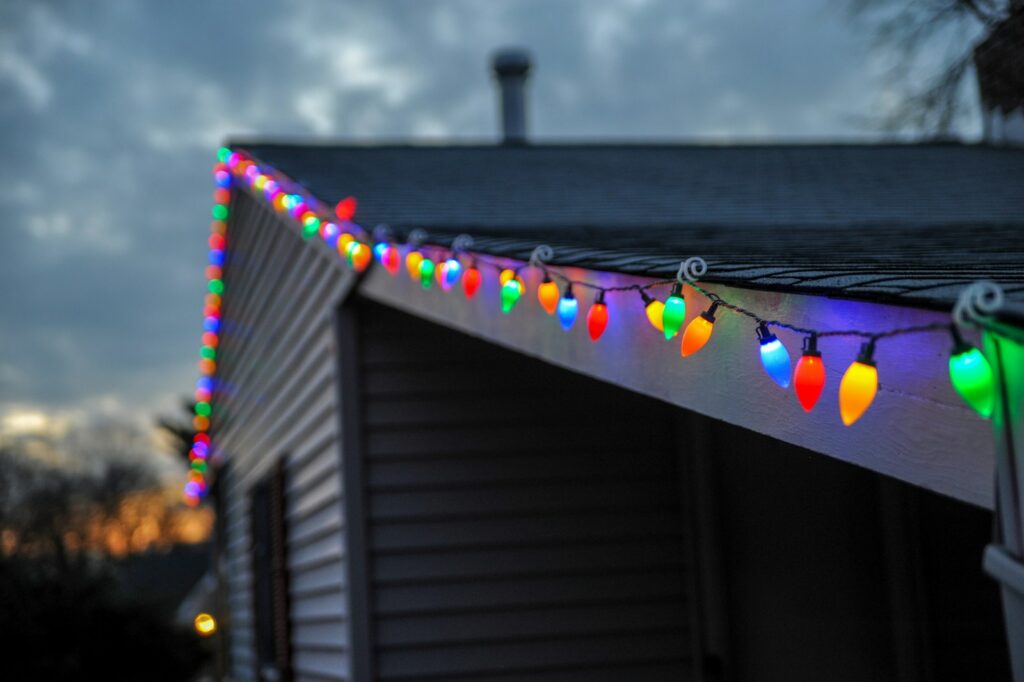
Laid out on the garage floor, about a third of his strings were old incandescent sets with a few cracked sockets and one spot where the insulation had been pierced by a staple from an earlier year. ESFI says to inspect lights and cords for damage before use and not to attach strings in a way that damages the cord insulation[2]. Those sets were thrown out, not repaired. He replaced them with LED strings. ENERGY STAR says a certified decorative LED string uses about 70 percent less energy than an incandescent string, and that certified LED strings are cool to the touch[5].
The staples were the bigger lesson. Earlier years, the strings had been stapled to the fascia and nailed into the gutter lip at the gable returns. That leaves holes in the trim and, on aluminum gutters, small holes where water sits. This year everything went up on plastic clips that hook the gutter lip or slide under the shingle edge, with no fasteners into the house. If your gutters are loose or the fascia behind them is soft, clips will show it fast, which is the same problem we wrote about in a Delmar gutter cleaning that turned into a fascia rebuild. His gutters were tight, so the clips held.
The outlet was the last check. He had always plugged everything into the porch receptacle. It worked, but it was not GFCI-protected. The CPSC says outdoor lights should be plugged only into a GFCI-protected receptacle or a portable GFCI[1], and ESFI notes that portable outdoor GFCIs are sold where electrical supplies are sold and need no special knowledge to install[2]. For this season he used a portable outdoor GFCI and a cord marked for outdoor use. Swapping the porch receptacle itself went on the spring list.
The questions that came up on the driveway
Most homeowners ask the same few things at this point. The first is timing. There is no rule, but in the Capital Region early November tends to work: the leaves are mostly down, the ground is not frozen yet, and the gutters are easier to work on before snow and ice sit in them. Lights hung in a December cold snap take longer and the clips are harder to seat.
The second is whether lights can stay up all winter. They can, but cords and connections should be kept clear of snow and standing water[2], so the plug-in point needs to sit above where snow piles up against the house. On his porch that meant routing the cord up the post instead of along the floor.
The third is cost, and the honest answer is that it depends on the roofline, not the number of lights. A single-story ranch with a straight eave goes quickly. A two-story colonial with gables means more ladder moves, and every ladder move is set up, leveled, and checked. That is where the hours go. For a broader look at what a handyman covers this time of year, the fall home repair checklist for Albany homes lays out the other jobs that usually get done on the same ladder.
How the season was laid out
He wanted to know what the whole season would look like, not just install day. This is how it was planned:
| When | What happens | Who does it |
|---|---|---|
| Late October | Strings tested on the garage floor, damaged sets thrown out, LED strings bought | Homeowner, with a list from us |
| Early November | Lights hung on clips along the eave, gables, and porch roof; portable GFCI and outdoor cord set up | Handyman |
| November to early January | Lights on a timer; cord connections kept off the porch floor and out of snow | Homeowner |
| Early to mid January | Lights taken down on a dry day, wound, and labeled by section for next year | Handyman |
Where it ended up
Install day took one morning. The gables were done from a fiberglass ladder set at the right angle on a cleared, level spot, with the leaves raked out from under the base first. The eave and porch went quickly after that. Each run was labeled by section when it came down in January, so the next year starts with strings that are already sized for each part of the roof.
He spent more than he would have doing it himself, and less than the seasonal package would have cost him over a few years, since he kept his own lights. He was also honest that part of what he paid for was not having to think about the ladder. That is a reasonable thing to pay for. It is also reasonable to keep doing it yourself if your house is a single story, your ladder is fiberglass and tall enough, and you have a level place to set it.
If you are weighing Christmas light installation in Albany, NY on a two-story house, the ladder setup, the outlet, and how the lights attach are the parts worth checking before you decide who climbs. If you would rather not do the climbing, you can see our handyman services in the Capital Region or reach out here.
Sources
- Put Safety at the Top of Your List When Decorating this Holiday Season, U.S. Consumer Product Safety Commission (2017)
- Outdoor Decoration Safety Tips, Electrical Safety Foundation International
- OSHA Quick Card: Portable Ladder Safety, Occupational Safety and Health Administration (via eLCOSH)
- How much does it cost to have someone hang your Christmas lights?, Thumbtack
- Light Strings, ENERGY STAR (U.S. EPA)