

Can You Sleep in a Freshly Painted Bedroom in Albany?
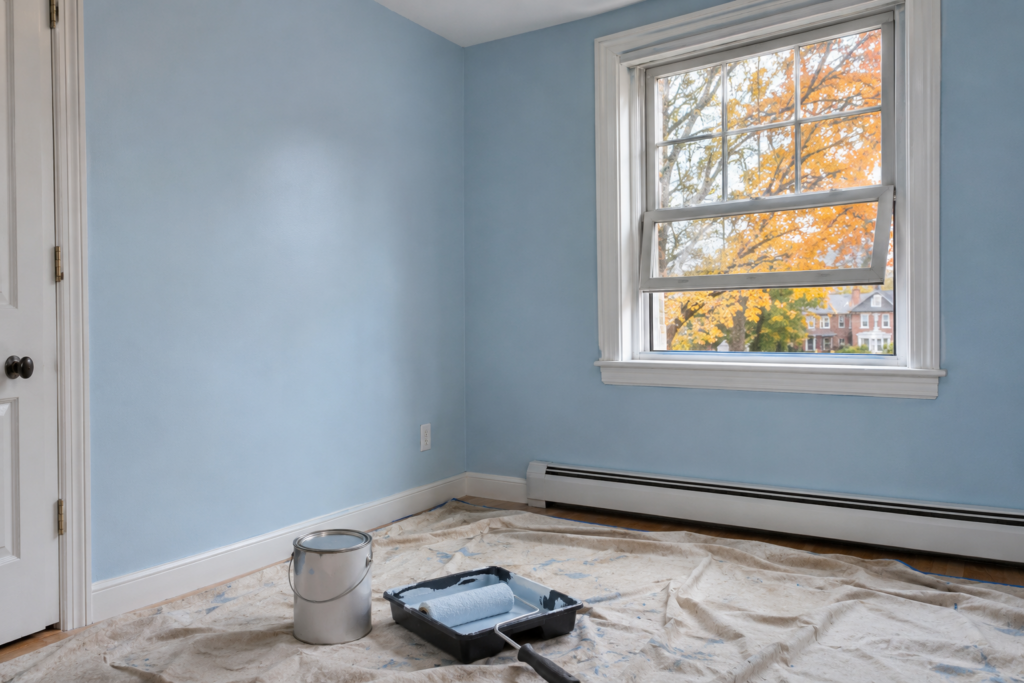
I would not promise that a freshly painted Albany bedroom is ready for an overnight guest simply because the walls are dry to the touch. I would first check the exact paint and primer, the ventilation instructions, and who will sleep there. New York’s Department of Health advises staying out of rooms with strong chemical odors and allowing fresh paint to dry and off-gas.[1]
The homeowner situation in this article is an illustrative example, not a report of a specific customer or completed job.
Consider a Colonie homeowner who wants a guest bedroom repainted before family arrives for Thanksgiving. The room needs an ordinary refresh, and the owner would like the bed back in place as soon as the second coat is finished. My starting question would be when the room needs to be occupied, not which afternoon we can get the rollers on the wall.
The label comes before a countdown
Search results offer everything from same-night reassurance to a fixed three-day wait. I would not turn any one of those numbers into a guarantee for this house. Different coatings contain different ingredients, and the job may include a primer or trim finish as well as wall paint.
The state’s VOC guidance explains that paints, finishes, and other household products can release volatile organic compounds into indoor air. It also cautions that low-VOC labeling does not necessarily describe a product’s likelihood of affecting health.[2] A low-VOC choice can be part of the plan without making ventilation unnecessary.
I would want the actual product names and instructions on the estimate or selection sheet. If the homeowner asks about interior painting in Albany, those details help make the discussion about this room rather than a general promise about modern paint. Our interior-paint guide covers coating and finish choices; this article concerns how the room returns to use afterward.
November changes the ventilation plan
Albany’s 1991–2020 November climate normals list an average daily high of 49.3°F and low of 31.6°F. Those are historical normals, not a forecast for the workday, but they explain why leaving windows open can be a practical scheduling issue here.[3]
New York DEC specifically notes that outside ventilation is limited during winter and recommends choosing low-VOC products.[4] I would discuss that constraint before work starts. A plan that depends on open windows needs to account for the weather and the product’s application conditions; it cannot be replaced by closing the room immediately to save heat.
The EPA and CPSC’s indoor-painting guidance recommends fresh-air ventilation during painting and, depending on the paint, for two to three days afterward. It presents that period as general guidance, not proof that every room or occupant is safe at a particular hour.[5] The product directions and the actual circumstances still matter.
“I would rather change the painting schedule than promise a guest bedroom is ready just because the walls feel dry. The product instructions and the plan for fresh air belong in that decision.”
Alex Sandul, Owner, A&S Home Services
In the illustrative guest-room project, I would give the homeowner two practical scheduling choices: start early enough to allow the required ventilation and review, or postpone that room until after the visit. Keeping another sleeping arrangement available removes the pressure to declare the room ready because somebody has arrived with a suitcase.
Dry, recoatable, and ready to occupy are different questions
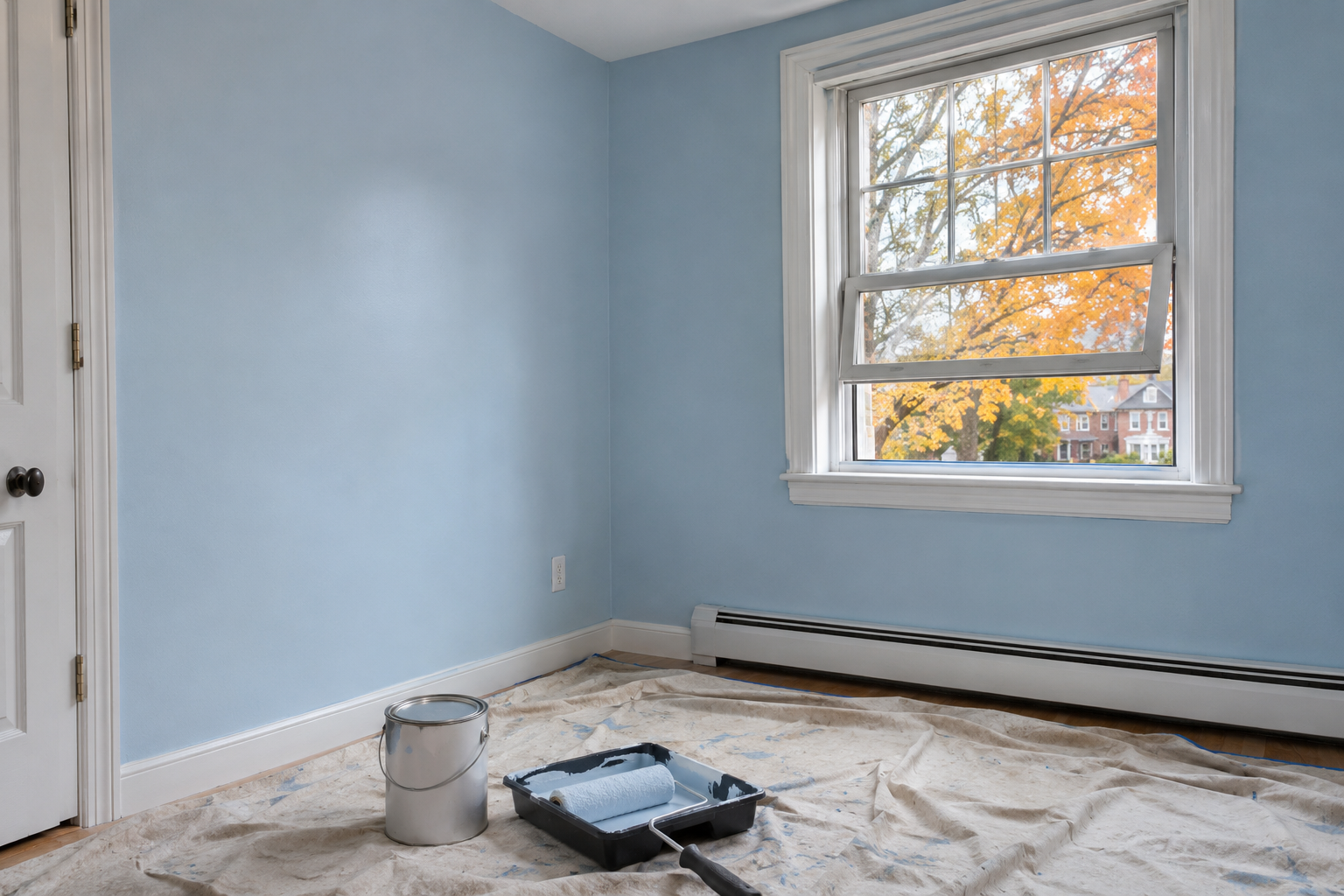
Benjamin Moore explains that drying time depends on the specific product and conditions, while curing is the coating reaching its full hardness.[6] A recoat interval tells the painter when another coat may be applied. It is not an indoor-air test or a sleeping-room clearance.
That distinction also prevents an unnecessary conclusion in the other direction. A finish that takes longer to reach full hardness does not automatically establish that the bedroom must remain unused for that entire curing period. I would keep surface-care instructions separate from ventilation and occupancy guidance instead of treating every paint-related timeline as interchangeable.
I would also ask who is using the room. EPA remodeling guidance calls for protecting occupants, particularly children, from work-area pollutants and maintaining ventilation after materials that off-gas are installed.[7] For a household member with a respiratory condition or another specific health concern, the contractor should not substitute a generic internet timetable for advice from that person’s clinician.
A bedroom fan is not the same as outdoor exhaust
Moving air around the room and removing it from the house are different actions. EPA guidance describes exhaust ventilation from the work area and measures to keep pollutants from spreading into the rest of the home.[7] The arrangement needs to fit the building; an ordinary ceiling fan does not by itself establish an outdoor-air exchange.
Our article about attic insulation and air sealing addresses another part of managing an Albany home. Tightening a building and planning ventilation should be understood together. I would not use the room’s comfortable temperature as evidence that the paint-related air question has been settled.
There can be a separate preparation issue in an older room. New York’s lead-safe renovation guidance warns that disturbing older painted surfaces can create hazardous dust and recommends a lead-safe certified contractor for relevant work.[8] That is a reason to establish the preparation scope before scraping or sanding, not to assume every older wall needs the same treatment. The home-repair safety discussion covers when specialist help belongs in the plan.
What I would agree before putting the bed back
I would want the homeowner to know which products were applied, what their instructions require, how the work area will be ventilated, and what remains to be checked before overnight use. Strong lingering chemical odor or discomfort is a reason to stay out and seek appropriate advice, not to rely on an elapsed-time promise.[1][2]
For the Colonie example, the useful outcome is a schedule the household can actually follow. The room can be painted before the visit if the preparation, product conditions, ventilation, and occupancy plan support it. Otherwise, changing the date is a sensible project decision. A finished-looking wall is only one part of a bedroom that is ready to welcome a guest.
Sources
- Indoor Air — New York State Department of Health
- Volatile Organic Compounds in Commonly Used Products — NYS Department of Health
- Albany Climate Normals, 1991–2020 — National Weather Service Albany
- Keep Air Clean — New York State Department of Environmental Conservation
- Healthy Indoor Painting Practices — US EPA and CPSC
- Paint Drying and Curing Questions — Benjamin Moore FAQ
- Best Practices for Indoor Air Quality When Remodeling — US EPA
- Lead-Safe Renovation, Repair, and Painting — NYS Department of Health